
Quick answer
There are a lot of brands on the market, and none of them is objectively the best. What matters is what suits your workflow. Here is what you actually need to start, and how to buy it without overspending.
What You Need
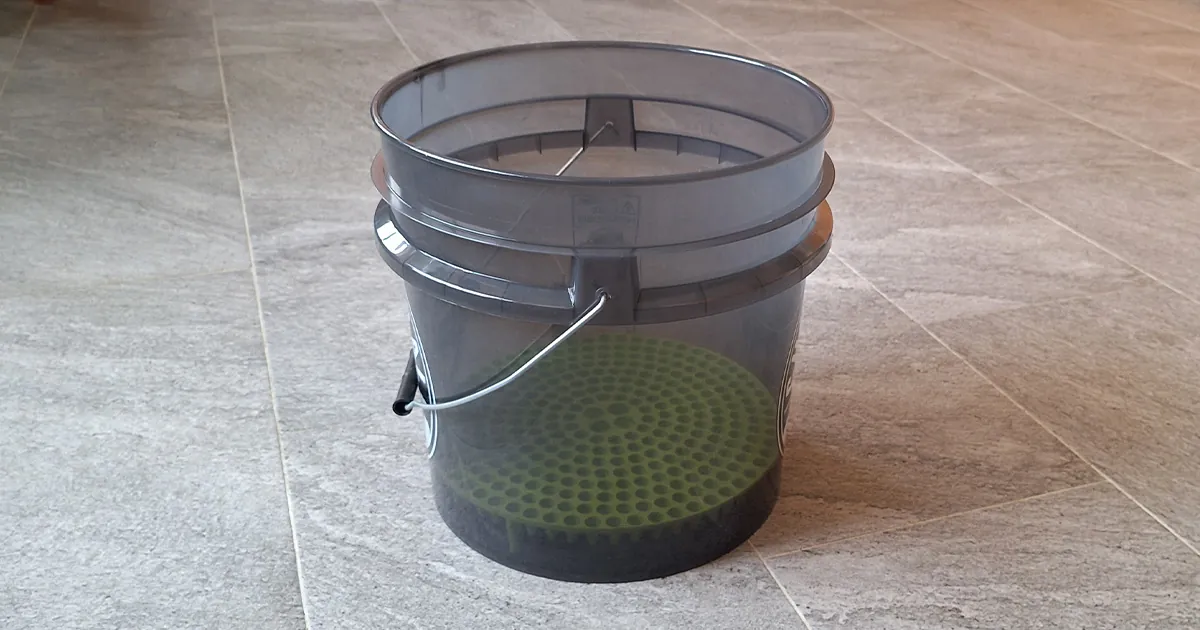
1. Two buckets with grit guards.
One is for the water-and-shampoo mix, and one holds clean water for rinsing your mitt. Both get a grit guard at the bottom to filter dirt out of the water. Here is how the two-bucket method works.
2. A wash mitt.
For the lowest, dirtiest parts of the car, consider using an older microfiber towel instead of your good wash mitt.
3. Car wash shampoo.
Around 50 ml (about 1.7 fluid ounces) in about 10 liters (2.6 gallons) of water.
4. A towel for drying.
Dry the car top to bottom with a towel, and use a microfiber towel for specific areas and the rims.
5. Soft bristle brushes.
A long soft bristle brush for the exterior, and for the interior one or two round soft bristle brushes plus a square soft bristle brush for plastic, fabric and leather. Add a square hard bristle brush for floors and the trunk.
6. Wheel tools and a wheel bucket.
A barrel brush, a long bristle brush, a wash mitt for the wheels, and a bucket of water with a dirt trap. Washing the rim barrel is a key part of the wheels looking great, so get inside it if you can.
7. Iron remover.
Iron particles from brake dust are part of the contamination on the paint and the wheels. Spray iron remover on, let it sit for a few minutes while you watch for its distinctive reaction, then rinse.
8. A clay bar and clay lubricant.
The car needs to be wet for this step. Use a dedicated clay lubricant, or a light car shampoo-and-water mix, though the latter will wear down the clay bar faster. Move the bar in straight lines with moderate pressure, and use a separate clay bar for the rims.
9. Microfiber towels.
For an average car interior, plan on a minimum of 12 to 24 standard microfiber towels, 16x16 inches (40x40 cm). Fold each towel in half, then in half again, so it gives you eight clean sides to work with.
10. A vacuum cleaner.
For the interior you need a vacuum cleaner capable of extracting water, with a hand nozzle for extraction.
11. A good lamp.
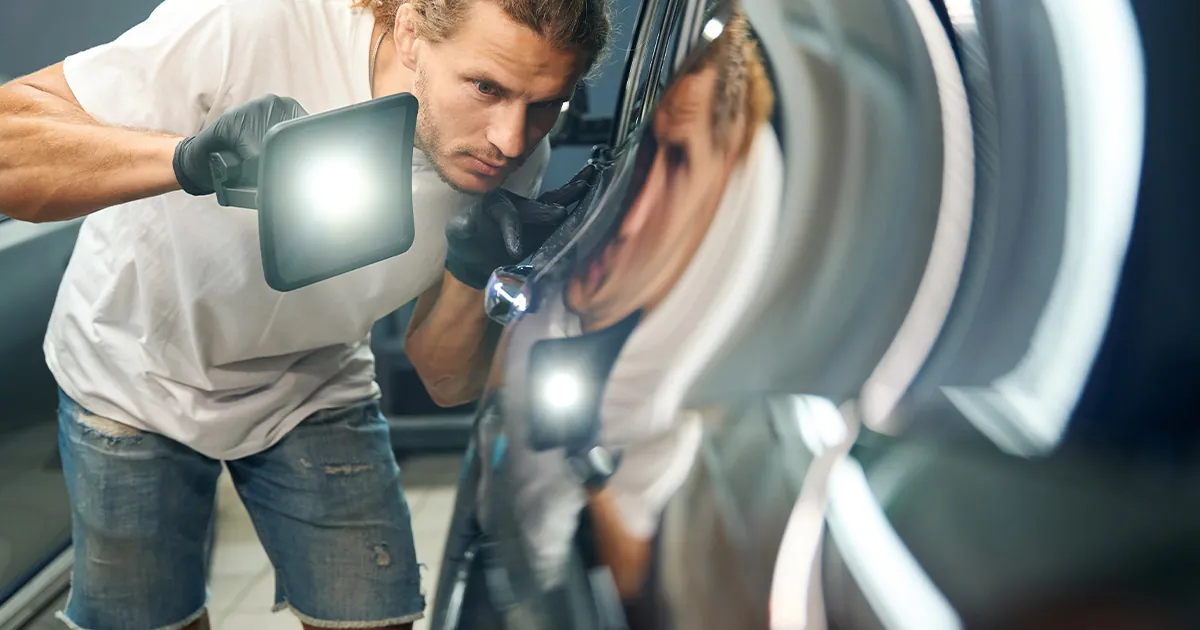
Good lighting, a handheld lamp or an LED reflector, reveals dirt and streaks your eyes alone will miss.
How to Buy Without Overspending
Buy in stages, not all at once. You don't need every item before you start. Prioritize what your first jobs need: for most people, that is the exterior wash and interior detailing gear, before the higher-end polishing equipment.
Don't buy the most expensive version of everything. Most professional tools, even the ones in the more economical range, will do the job equally well. With the pricier gear you are often paying for image more than performance. Spend where it actually shows up in the result. A proper extraction vacuum is worth investing in, since a cheap one noticeably underperforms. A mid-tier rotary polisher does the job just as well as the top-of-the-line model for the vast majority of work.
Try a few products. Just because someone you know didn't like a particular brand doesn't mean that brand is bad. It might just not suit their process.
Want the full workflow?
My Exterior Car Detailing Course covers washing, decontamination and protection start to finish, and my Interior Car Detailing Course does the same for the cabin. Both are on Udemy and both are beginner-friendly.