
Quick answer
Chemical decontamination (iron remover and tar remover) comes first, followed by physical decontamination with a clay bar. There is a reason chemicals come first: if you try to force something like tar mixed with sand off the paint, the friction and abrasion will scratch it.
On light-colored cars, contamination is often visible to the naked eye as small dots ranging from red and orange to black. Another way to check is to run your hand across the surface. If it feels rough, almost like there are a thousand tiny dots under your fingers, that is contamination buildup.
Beyond making the surface rough, this buildup also stops water from sheeting off the car properly and prevents light from reflecting cleanly, which is a big part of why a contaminated car looks duller than a clean one. Removing it is decontamination, and there are two kinds: chemical and physical.
What Is Actually on the Paint
Contamination tends to concentrate around the wheels, emblems and panel gaps, and the lower sections of the car often build up tar in the form of rough black dots. The buildup is usually a mix of several things: iron particles from brake dust, tar from asphalt roads, tree sap, pollen and other airborne chemicals.
Chemical Decontamination
There is a reason chemicals come first. If you try to force something like tar mixed with sand off the paint, the friction and abrasion will scratch the paint. The correct method is to use a chemical to dissolve the contamination and remove it safely.
Iron remover. Spray it across the whole car and let it sit for a few minutes, watching for its distinctive reaction as it works. You can agitate the surface with a small microfiber pad to help it dissolve more of the buildup, then rinse the car with the pressure washer.
Tar remover. Dry off the affected sections first, since the tar remover works better on a dry surface. Then wipe off any remaining tar spots with a microfiber towel and rinse the area.
Physical Decontamination With a Clay Bar
The car needs to be wet for this step. Use a dedicated clay lubricant, or a light car shampoo-and-water mix, though the latter will wear down the clay bar faster.
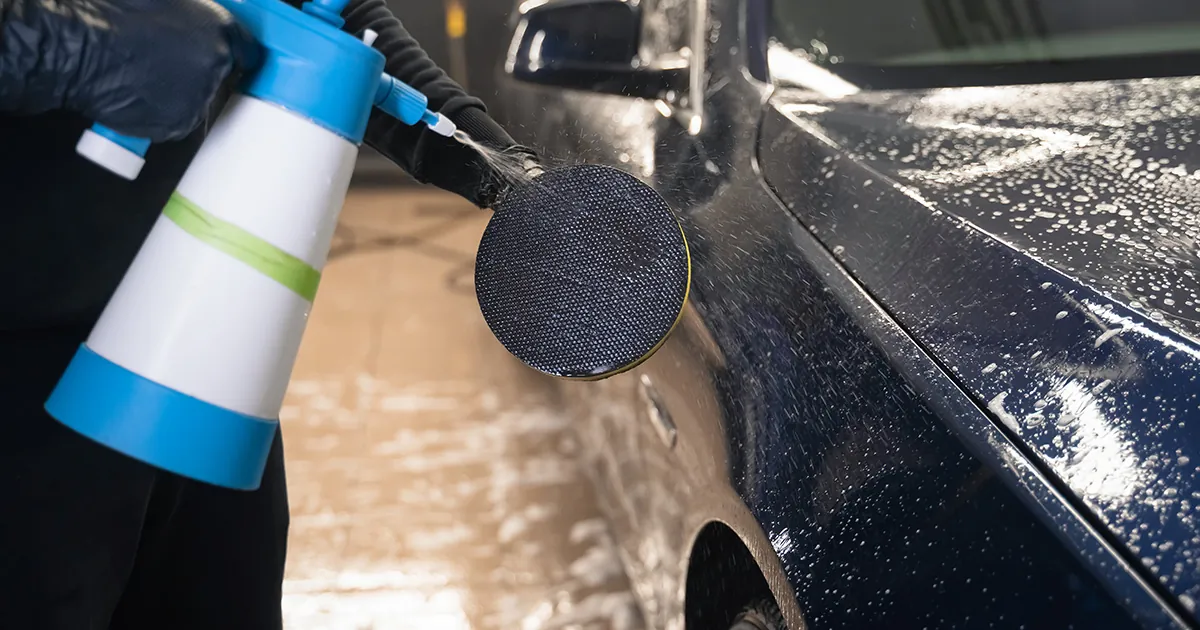
Work top to bottom in smaller sections, mentally dividing each panel in half and focusing on one half at a time. Always move the clay bar in straight lines rather than circles, and apply moderate pressure. A few passes across a section are usually enough to lift the contamination, but keep checking with your hand as you go to confirm the surface is actually smooth. Dry each section with a microfiber towel before moving to the next panel.
You can clay the rims too, but use a separate clay bar for them. The debris on wheels and lower panels tends to be coarser and will wear out a clay bar faster than the bodywork does.
If you are decontaminating a car as prep for polishing, go with a more abrasive clay that strips contamination easily, then dry the car completely.
The Order
- Wash the car.
- Iron remover across the whole car, then rinse.
- Tar remover on the tar spots, then rinse the area.
- Clay bar, on a wet surface with lubricant.
- Dry any remaining water in areas like the door jambs, fuel intake and engine bay.
With the exterior clean, decontaminated and dry, the car is ready for the next stage: interior detailing, or straight into polishing. In every case, before protection the surface needs to be properly clean, so the protective layer can actually bond to the clear coat.
Wheels
Spray iron remover directly onto the alloy wheels, working top to bottom and covering the entire surface. Wait for the car to cool off first. If a rim has heavier brake dust buildup, repeat the iron remover on the problem sections and give it time to work while you move on to the next rim. If one rim takes longer than the others, the chemical can start drying on the rims you haven't gotten to yet. Re-apply it, or spray a little water from the pressure washer to keep them wet, so the dirt doesn't resettle onto the rim.
Want the full decontamination process on video?
My Exterior Car Detailing Course covers washing, chemical and physical decontamination, and protection in order. It has 11 lessons and a quiz on Udemy.