
Quick answer
There are two main types of polishing machines: rotary and dual action (DA). A rotary can burn the paint if it is used too aggressively. A DA is a much more beginner-friendly tool. The short version: as a beginner, start with a DA. If you want the reasoning, and the jobs where a rotary is the right tool, read on.
How They Differ Mechanically
A rotary machine has a disc that revolves around a single central axis. It spins around itself. This spinning generates a lot of friction, which cuts the clear coat quickly and effectively. That is also the double-edged sword: apply it too aggressively and you can burn the paint.
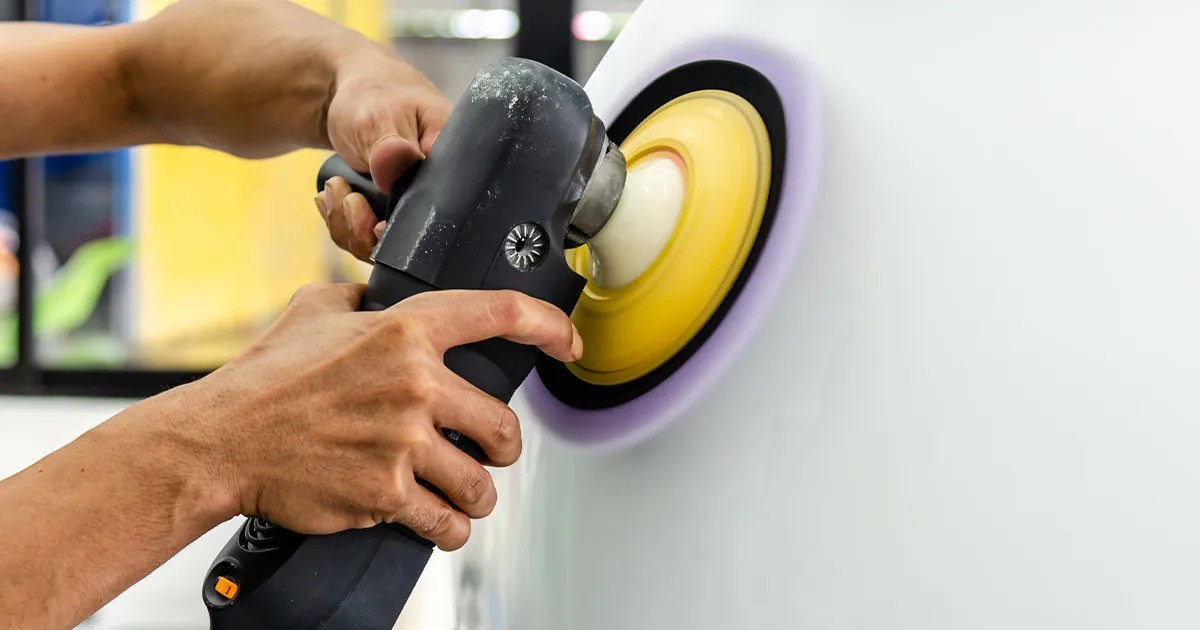
A dual action (DA) machine spins on two axes: its own axis, plus an orbital motion. This dual movement significantly reduces heat generation and abrasion, resulting in a less aggressive but still effective polish.
The difference in role: the rotary speeds up the cutting of the clear coat, while the DA refines it and delivers a flawless finish.
Why the DA Is Safer
The clear coat is the only layer you can work on, and it is thin. Polishing is a process of thinning it down until no damage remains, so burning or cutting straight through it is a real risk. On a factory-painted car the total thickness of all the paint layers is around 130 to 180 microns, and the clear coat makes up roughly 60% of that. This is a rough estimate, because it varies from manufacturer to manufacturer.
A rotary cuts fast, and applied too aggressively it can burn the paint. The DA's reduced cutting power and lower heat make mistakes far less costly.
On panels with sharp edges, whichever machine you use, never run the polisher hard against the edge itself. It creates excess abrasion and can damage the clear coat there. Move the polisher along both sides of the edge instead.
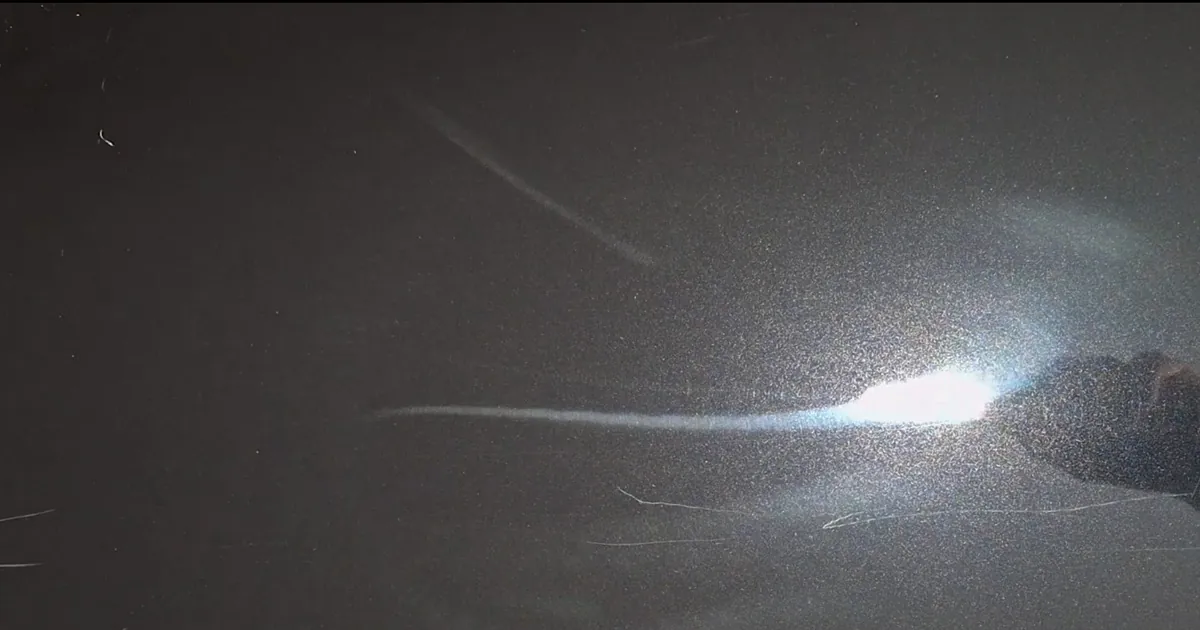
Polishing with only a rotary can also leave paint holograms: a defect visible under strong light, like direct sunlight, that looks like a trail of tiny swirls in the paint. The DA is what refines the clear coat and removes any holograms left behind by a rotary. A one-step correction with a DA gives high gloss without holograms.
What You Give Up With a DA
Cutting power. A DA is mainly used for one-step correction and for the final stages of multi-step correction.
For deep scratches on a hard clear coat, you might use a rotary, a wool pad and a cutting compound. This removes the scratches but leaves the clear coat rough. Next you refine it with a DA, a cutting foam pad and a medium-cut compound. Finally, a DA with a light foam pad and a super finish compound delivers high shine with no holograms.
Hard clear coats (Porsche, BMW, Mercedes, Audi, Volkswagen, Mini, Lamborghini) call for more abrasive combinations: wool pads, a rotary machine and heavy-cut compounds.
Which Machine to Start With
Start with a DA. It is a much more beginner-friendly tool, because the reduced cutting power and lower heat make mistakes far less costly than they would be with a rotary. It is mainly used for one-step correction and the final stages of multi-step correction.
A rotary needs real care, given how much abrasion and heat it generates, and it can be a bit hard to control at first. It is used for the first, most abrasive stage of a multi-step correction, followed by DA stages that refine the clear coat and remove the holograms.
What Else You Need
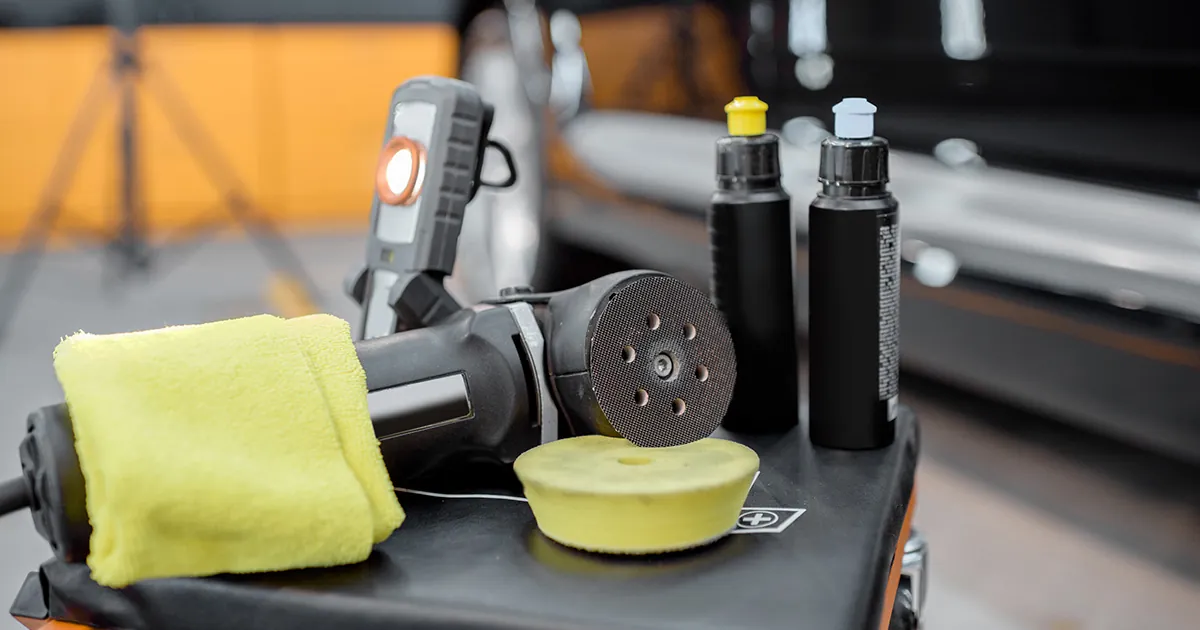
- Pads. Keep a pool of several clean pads ready before you start. As a pad fills up with compound and clear coat residue it loses friction and abrasion, so switch to a clean one. Expect to use about one pad per medium-sized panel, or two on a larger one.
- Compound and polish. In essence you are either cutting the clear coat down to reach undamaged material, or refining it to a perfect finish. Product labels use terms like heavy cutting, medium polishing, light polishing and super finish.
- A paint thickness gauge. It lets you inspect a car before you start polishing. It is not an infallible safety net, but it is a genuinely useful tool for helping prevent damage while you work.
- An inspection lamp to check the panels for any remaining deeper scratches.
Test Before You Commit
Always run a test section first and look honestly at the outcome before committing to the whole car. Test a pad-and-compound combination to see if it meets your target result. With experience, you will start to remember what works best for each type of clear coat.
Want to see the technique?
My Car Polishing Course covers machine handling, reading paint, pad and compound selection, and correcting without damage. It has 13 lessons and a quiz on Udemy.