
Quick answer
Leather in cars comes in a few different types, and knowing which one you have decides how you clean it. Here is how to tell them apart and how to clean and protect each one.
First, Find Out What Kind of Leather You Have
Coated leather is what you will find in most cars. It has been processed and coated with a layer of pigment to give it a uniform texture and color.
Aniline leather is far more natural and much less processed, and it is rarely used in cars. It is more common in luxury furniture. Only a small percentage of luxury vehicles use it, mostly older Mercedes models, Porsche Exclusive interiors, Bentley and Rolls-Royce.
Nappa isn't actually a distinct type of leather. It refers to the finish: a flat, smooth finish rather than a pebbled texture.
Eco-leather, vegan leather and similar names all describe the same thing: a synthetic, plastic-based alternative designed to look and feel similar to real leather.
The wrinkle test. To tell real and synthetic leather apart, press down on the surface with a finger. Real leather forms a series of small wrinkles around the pressure point, the same way your skin does. Synthetic leather generally doesn't.
Choose the Right Cleaner
Use a proper leather cleaner, and look for pH-neutral products made specifically for leather. Use it on faux leather too, because a strong cleaning agent can discolor or damage faux leather just as easily as real leather.
Harsh chemicals damage gentle surfaces just as surely as a sharp tool does. For example, an adhesive remover is a very strong solvent that can damage plastics or leather, so never use it directly on those surfaces.
How Leather Gets Dirty
Over time, body oils, dirt, food and anything else that touches the surface transfers onto the leather, gradually building up a layer of grime. Depending on the leather type and the car's conditions, such as humidity and how porous the leather is, this layer can start seeping into the material itself, sometimes staining it permanently.
The Method for Coated and Synthetic Leather
You will need a leather cleaner, a soft bristle square brush for leather, and four to six microfiber towels.
- Start with the passenger seat backrest. Lightly spray the leather cleaner onto the surface, then use the brush to spread it and start working it in. Some cleaners come as foam and apply a bit differently: you might apply it to the brush instead of the leather.
- Wipe and check. After a few passes with the brush, wipe off the excess with a microfiber towel and check the color of the dirt coming out. Repeat as needed.
- Check the seams, where dirt accumulates over years of use. A round brush helps lift debris from seams and makes it easier to vacuum out.
- Work section to section, the same way as on the textile seats, finishing on the driver's side.
- Check again for any leftover patches or liquid on the leather once the seats are finished.
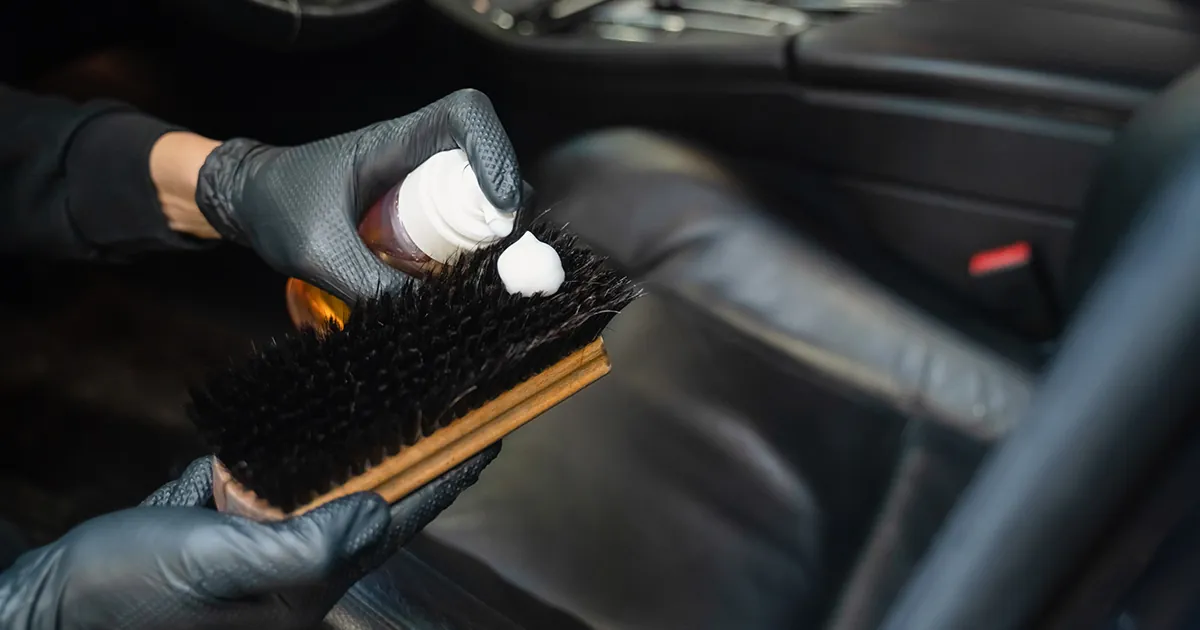
Light-colored seats take more time and attention to texture. Leather and faux leather can have deep pores that collect dirt, which a soft bristle brush can gently break up and lift.
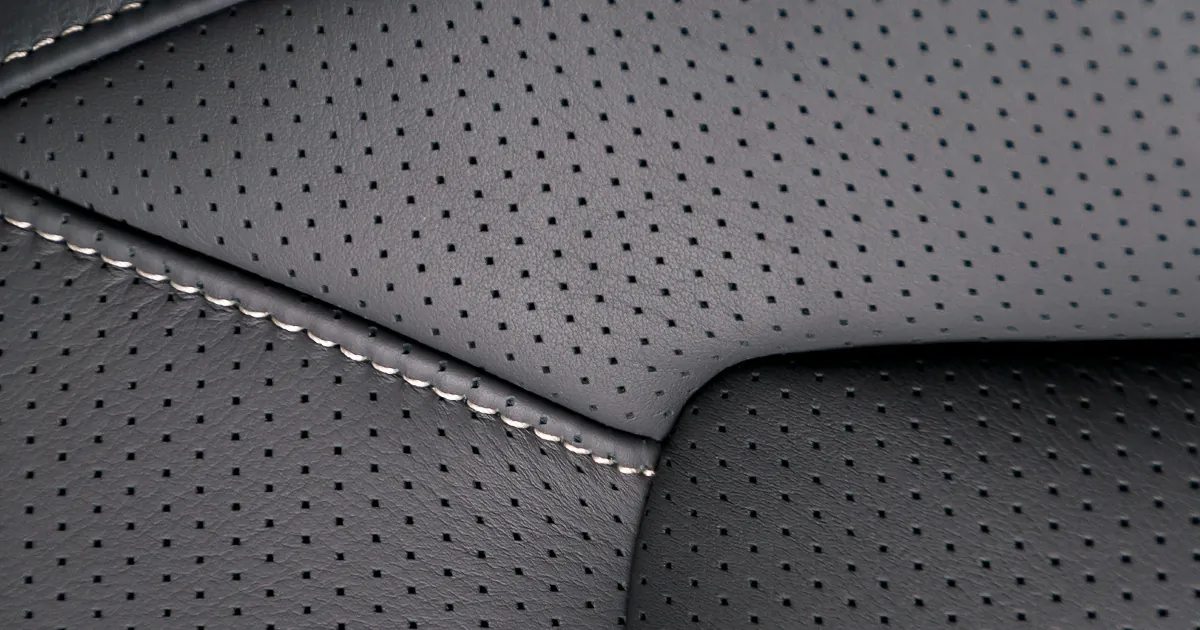
Dye can start lifting on older or heavily used seats, due to environmental factors, general wear or overly aggressive cleaning in the past. In these cases, clean gently to avoid causing further damage.
Cleaning Aniline Leather
Aniline leather requires a different approach, mainly because it is unprotected and will absorb a lot of whatever you spray directly onto it. Instead, spray the leather cleaner onto a microfiber towel first, then wipe the surface with the damp side. Repeat as needed.
Conditioning and Protection
Leather conditioning means applying a conditioner to a clean leather surface. Its main job is adding a protective layer. Conditioners work on both real and synthetic leather. On synthetic leather it works mainly as UV protection, while on real leather the material actually absorbs some of the conditioner, which hydrates it and adds elasticity, improving durability.
Apply it with a microfiber or soft sponge applicator, rub it into the surface, and wipe off the excess with a clean microfiber towel. A good conditioner shouldn't drastically change how the leather looks or feels: after treatment it should stay soft and dry to the touch, not overly shiny. Depending on how often the car is used, apply it every one to three months.
Leather ceramic coatings are another method of protection. They guard against staining while keeping the leather's original look and feel, and they bond to the surface for a long time, typically 12 to 24 months. Like conditioner, they need to be applied to clean leather and wiped off shortly after application.
Test First
Try the exact chemical combination you plan to use on a small, inconspicuous part of the leather first, to see how it reacts before you commit to the whole seat.
Want the full interior workflow on video?
My Interior Car Detailing Course covers leather, fabric, dashboard and trim, glass and pet hair. It has 16 lessons and a quiz, about an hour and a half of video, on Udemy.